Digital matter management: from paper to pipeline
How to make the matter the central object of the firm: pipelines by practice area, computed deadlines, a document vault, and communications on the matter.
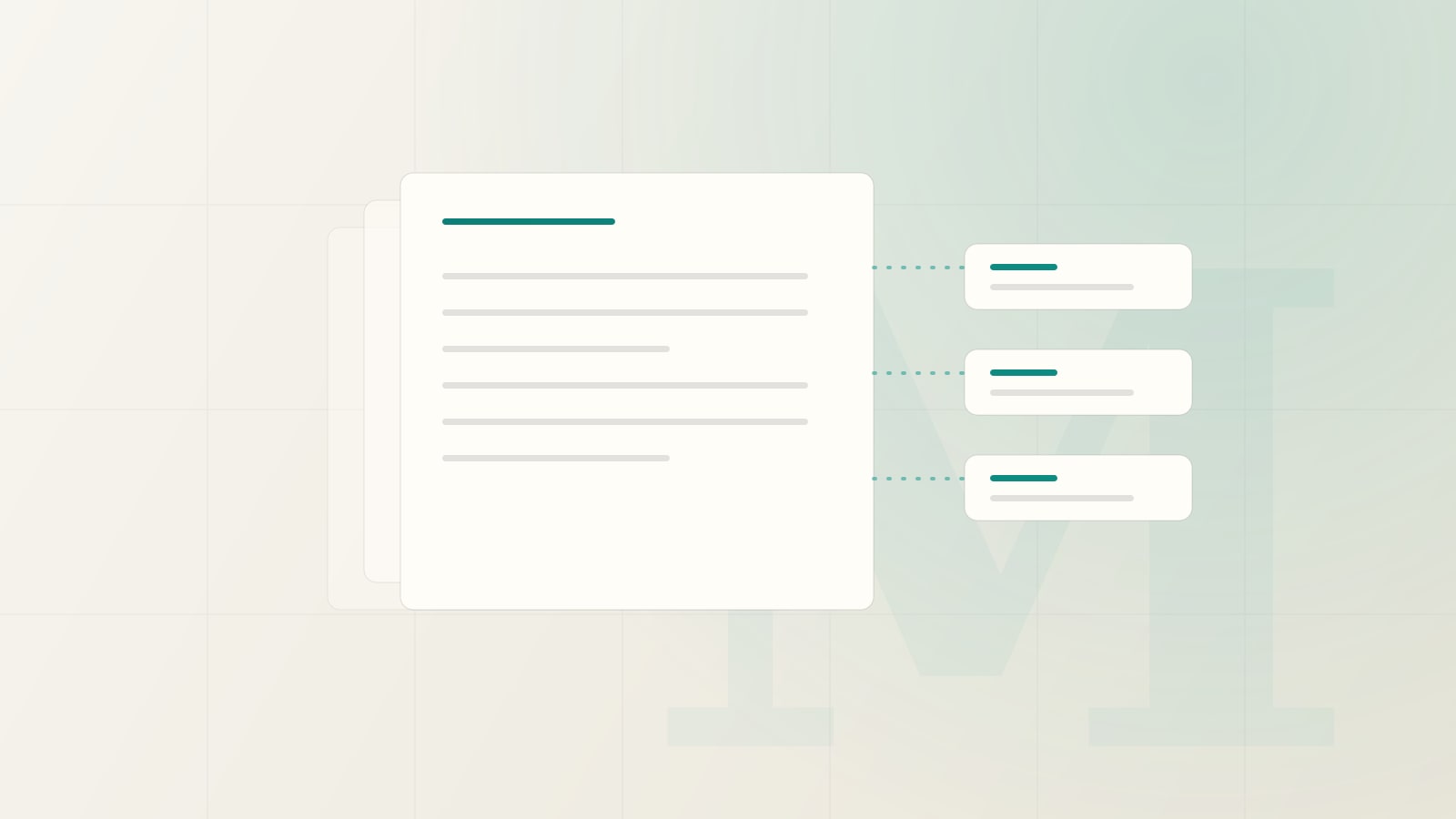
Every firm turns around one object: the matter. Yet in many firms that object does not exist as such. The information about a case lives scattered across email folders, documents on a shared drive, handwritten notes, deadline spreadsheets and the memory of whoever runs the file. Every query forces someone to reconstruct the story. Digitalising a firm is not about scanning paper — it is about making the matter the real centre of work, with documents, communications, deadlines and billing all hanging from it.
This guide walks, step by step, through moving from scattered paper to a coherent pipeline: how to model the matter, design stages by practice area, manage deadlines, keep documents, hold every communication on the matter, and hand work off to billing seamlessly. And it does so honestly about what the software automates and what it does not.
The matter as the central object
The first shift in mindset is to stop thinking in folders and start thinking in matters. A matter is not a directory of files: it is the complete representation of a case — its client, its practice area, its status, its history and everything produced within it.
When the matter is the central object, three things happen. First, any member of the team can open a case and understand in seconds where it stands, without asking. Second, the history builds itself: every action — an email sent, a document signed, a deadline met — is recorded in chronological order. Third, there is no more orphan information: nothing relevant happens “outside” the matter.
In Mandato, the case management module starts from this idea. Each matter gathers its automatic history, its documents, its communications and its deadlines, so the matter stops being a folder and becomes a living workspace. That unification is the foundation everything else rests on; without it, every later improvement stays half-done.
Designing pipelines by practice area
A pipeline is the sequence of stages a matter passes through from intake to closure. The key point is that there is no single pipeline: each practice area has its own natural path.
- A litigation matter might move through admission, response, evidence, hearing, judgment and enforcement.
- A real-estate transaction follows another logic: instruction, due diligence, registry and cadastral checks, completion and post-completion.
- An immigration matter advances through consultation, documentation, filing, requirements and resolution.
Modelling these stages well has an immediate effect: the matter’s status stops being a vague label and becomes actionable information. You can see at a glance how many cases sit in each stage, which have been stuck too long, and where work is piling up.
A practical tip when designing them: start with fewer stages than you think you need. A pipeline with five or six clear stages survives; one with fifteen gets abandoned. Stages should correspond to real changes of status, not to every micro-task. Firms with international clients often run several areas in parallel, and there a distinct pipeline per area avoids mixing logics that have nothing to do with each other.
Deadline management: compute, don’t remember
Deadlines are where a firm stakes its liability. Digital matter management changes the approach: instead of remembering deadlines, you compute them.
A good share of procedural deadlines arise from a notification. Here it is worth being precise about what the technology does. Mandato integrates with LexNET to receive notifications and file written submissions without leaving the matter. From the notification received, the matter computes the resulting deadlines and places them on the case calendar, so they no longer depend on a manual note or on memory.
The deadline is computed automatically from the notification date and stays in plain sight of the whole team on the matter. Confirming it remains the lawyer’s job; what disappears is the work of watching it by hand.
This nuance matters. That the deadline no longer depends on someone remembering it is, where professional responsibility is concerned, precisely what reduces the risk. What adds real value is that the deadline is computed automatically from the notification date and stays visible on the matter for the whole team.
The document vault per matter
Documents are the body of the matter. In a digitised firm, each document lives inside the matter it belongs to, not on a shared drive where nobody can find the latest version.
The documents module organises a vault per client and per matter, with templates to generate recurring documents and integrated electronic signature. On that last point it is worth being exact: Mandato’s electronic signature is not an eIDAS-qualified signature; it serves to speed up internal or client approvals and acceptances, not acts that require qualification.
The vault also includes AI extraction: it can read a document already held in the matter and extract the relevant data to populate the case. This saves manual transcription, but it always operates on documents the firm already possesses; the AI does not go off to fetch information from external sources on its own.
Three habits make the vault work:
- A single place per document. No stray copies in email or on the desktop.
- Templates for the repetitive. Documents that recur are generated from a template, not redone.
- Versions inside the matter. The latest version is always where it should be, visible to the whole team.
Every communication on the matter
Communication is the other half of the matter that usually stays outside. Emails with the client, WhatsApp messages, exchanges with the other side: if they live in each lawyer’s personal inbox, the matter is incomplete and the knowledge is fragile.
The communications module brings Gmail, Outlook and WhatsApp Business into a single inbox anchored to the matter. Each message is associated with the corresponding case, so the conversation forms part of its history rather than of a personal account. When a colleague picks up a matter, they see everything that has been discussed without forwards or reconstructions.
The benefit is twofold. On one hand, continuity: knowledge of the matter does not leave with the person who ran it. On the other, traceability: if you need to evidence what was communicated and when, the conversation is on the matter, in order.
From execution to billing
The final stretch of the journey is the hand-off to billing. A well-managed matter does not force anyone to reconstruct what was done in order to bill it: the work is already recorded.
The billing module generates invoice PDFs — provisiones de fondos, proformas, igualas — from the time booked to the matter. Records are generated chained, sequentially numbered and immutable, that is, ready for VeriFactu. Full VeriFactu compliance and submission are carried out through the export to Holded; Mandato prepares the records in the required format and with the required guarantees, and it is in that flow to Holded that the submission part is completed.
When the matter is the central object, this step stops being an administrative bottleneck. Time is booked to the case as work happens, and the invoice is built on data that already exists, not on an end-of-month effort of memory.
A realistic transition plan
Moving from paper to pipeline does not require a great leap. This order tends to work:
- Model one practice area first, the one you know best, and define its pipeline with few stages.
- Move the live matters of that area, not the entire historical archive.
- Anchor the communication of those cases to the matter from day one.
- Connect notification reception and let deadlines compute themselves.
- Close the loop with billing once the team already works naturally on the matter.
- Replicate the model across the other areas, adjusting the pipeline to each logic.
Digital matter management pays off when the matter stops being a folder and becomes the place where work actually happens. To see how all the pieces fit, start with the full set of features and then go deeper into the case management module.
Less admin. More law.
Mandato brings matters, communications, billing and compliance into one platform built for firms in Spain.